Madras House
A South Indian restaurant in a repurposed row house, reinterpreting the warmth of traditional homes and eateries through teak, cane, brass and handcrafted detail.
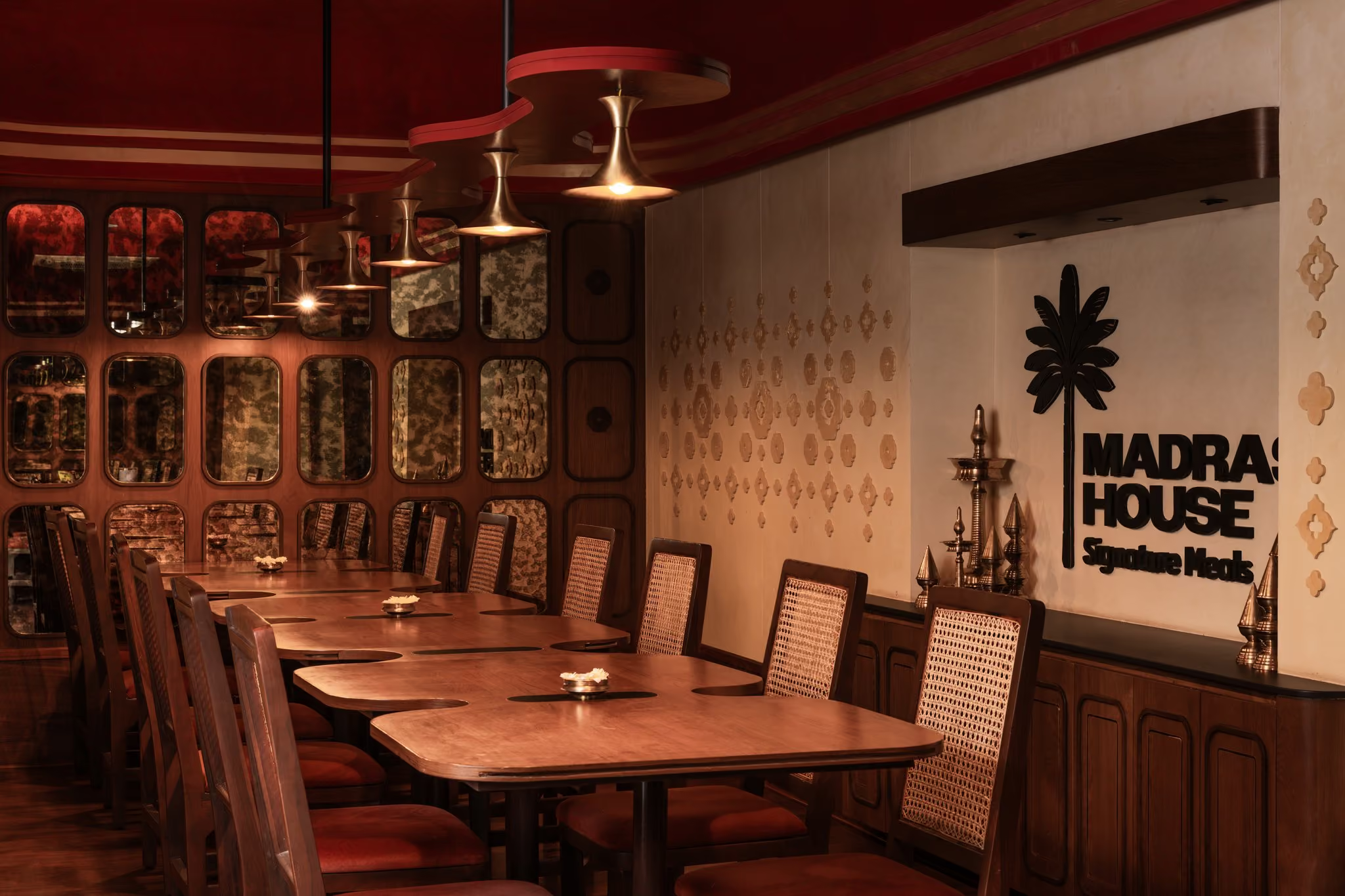
Teak And Cane
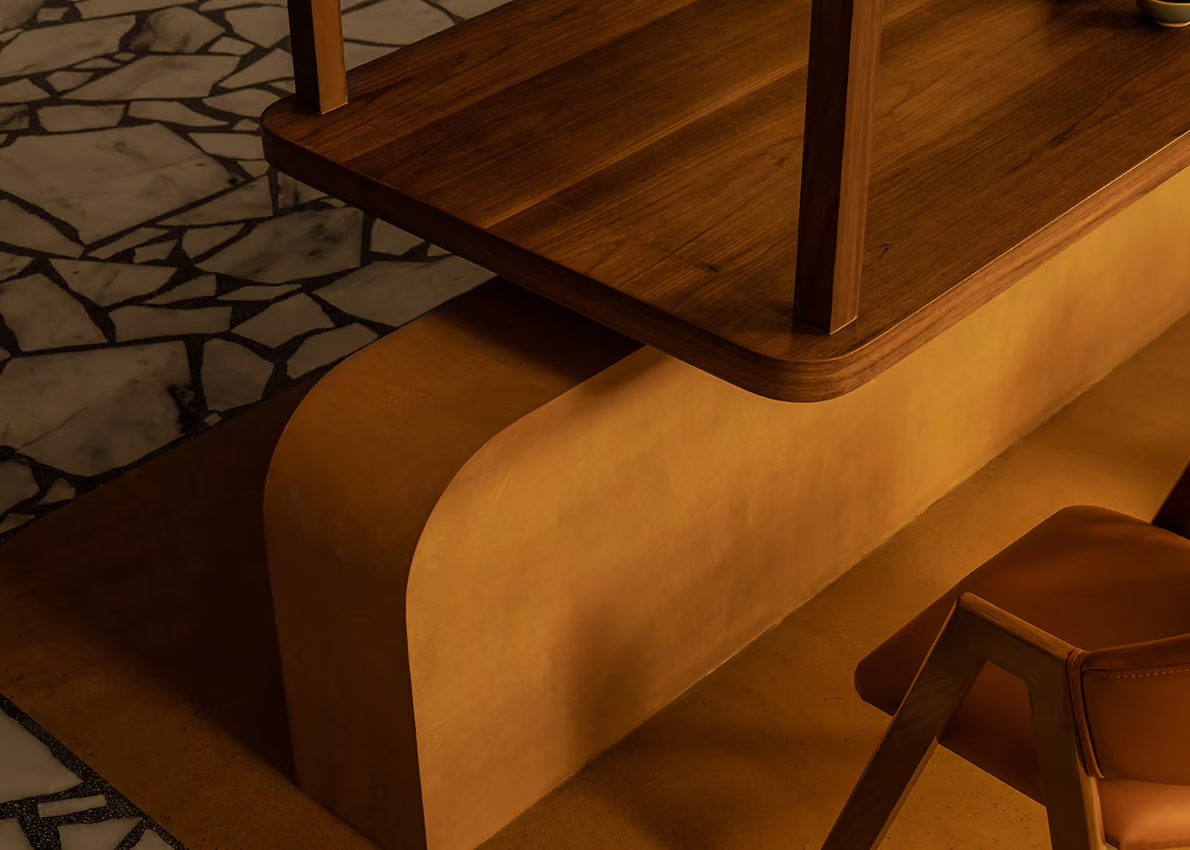
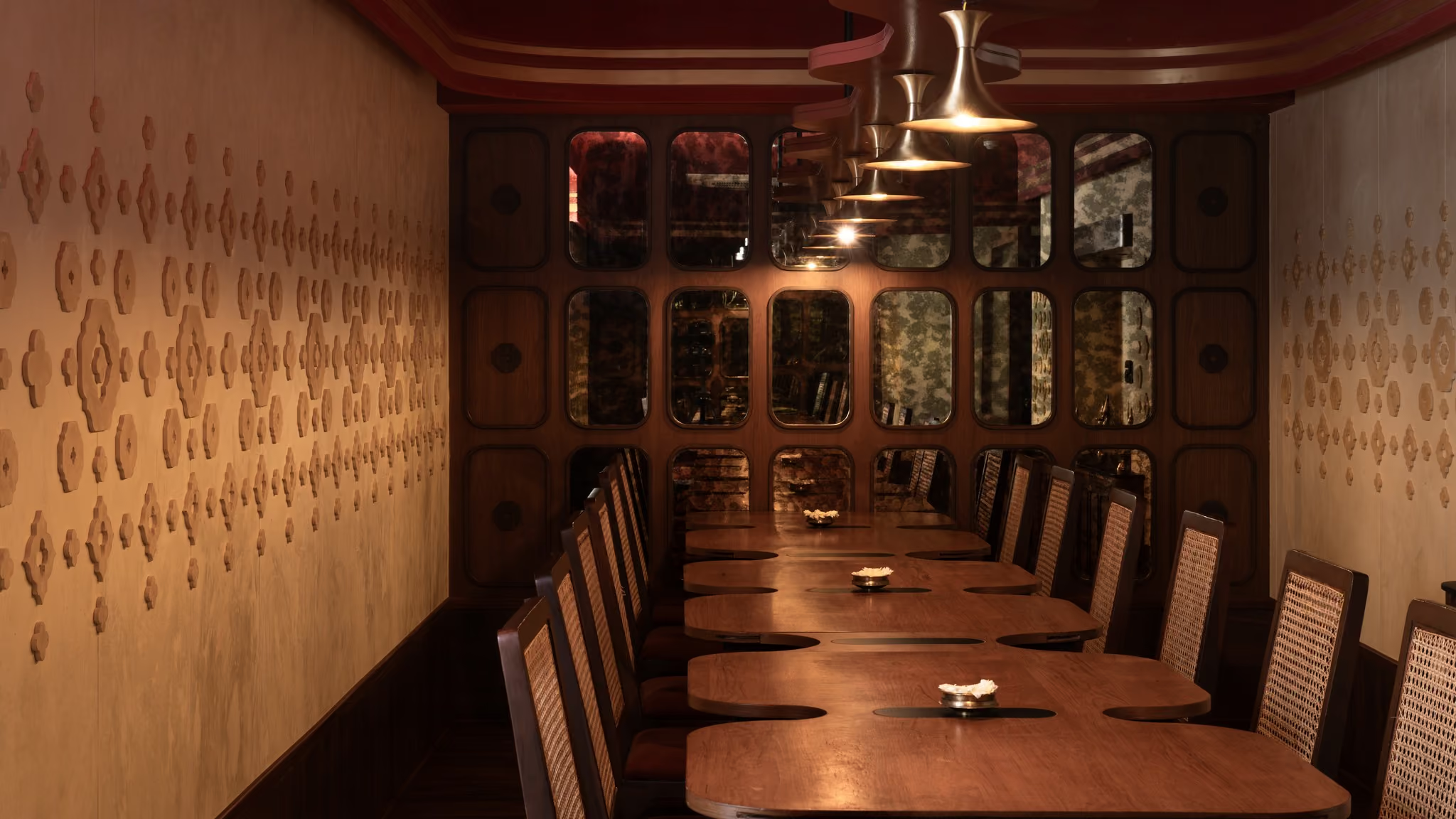
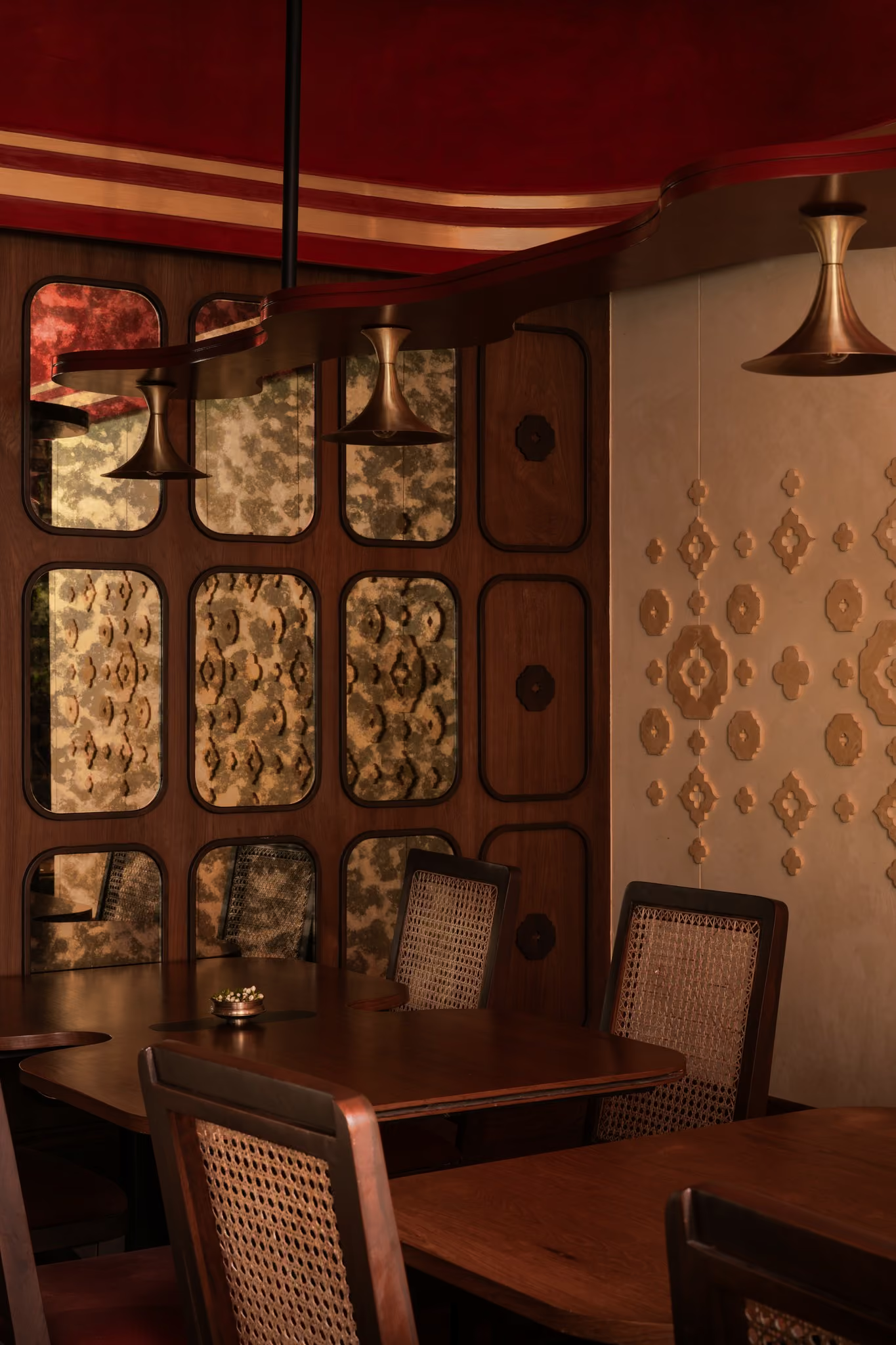
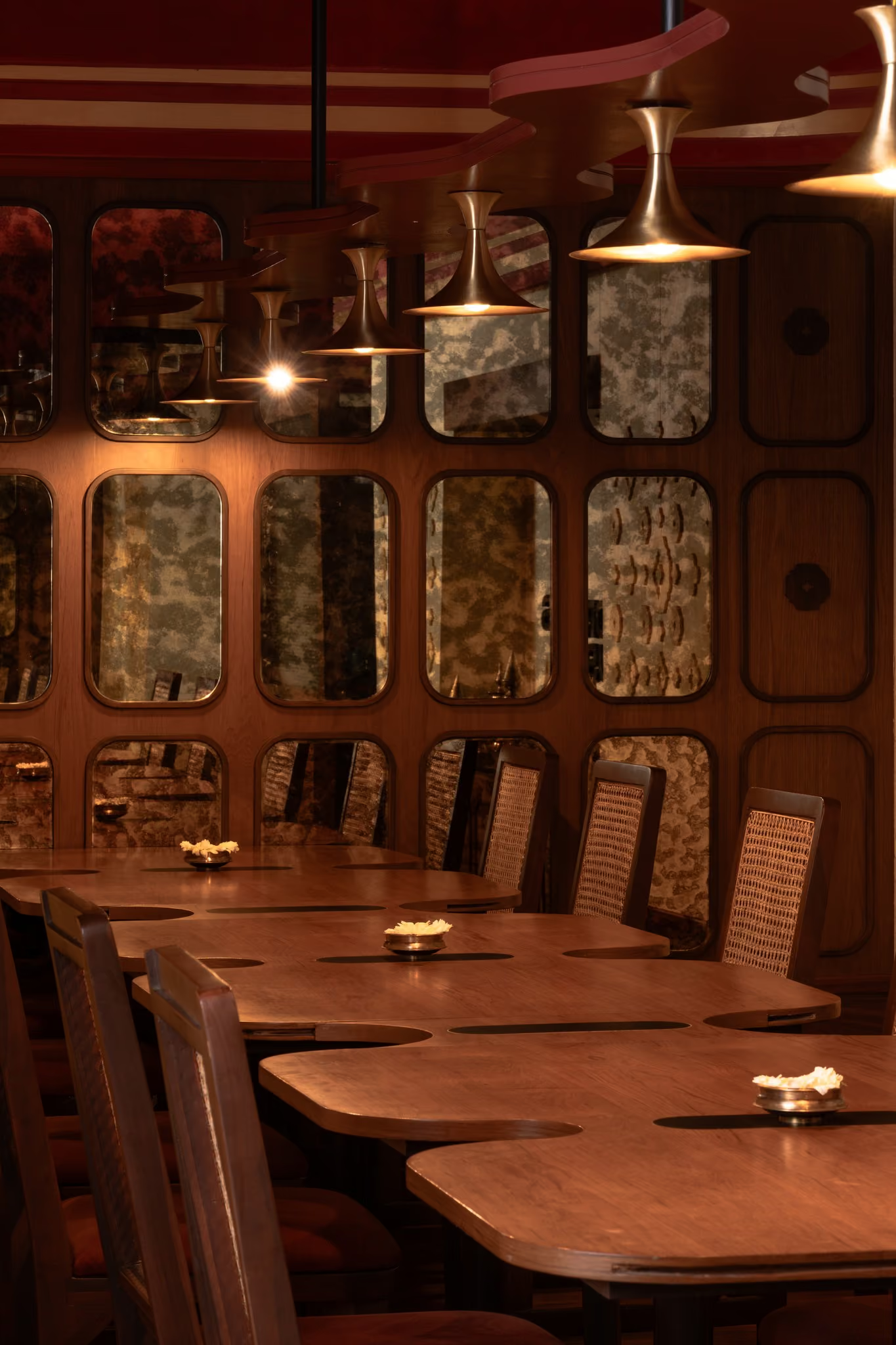
Teak-toned wood sets the tone. Panelled walls, rounded-corner frames and custom tables with soft, organic edges form a continuous, tactile backdrop, while high-backed chairs with woven cane panels and rust-red upholstery recall traditional South Indian homes and Irani-style cafés. Antiqued mirror panels set within the joinery catch the glow of the room and give it depth, and small octagonal wooden knobs add a quiet, crafted detail.
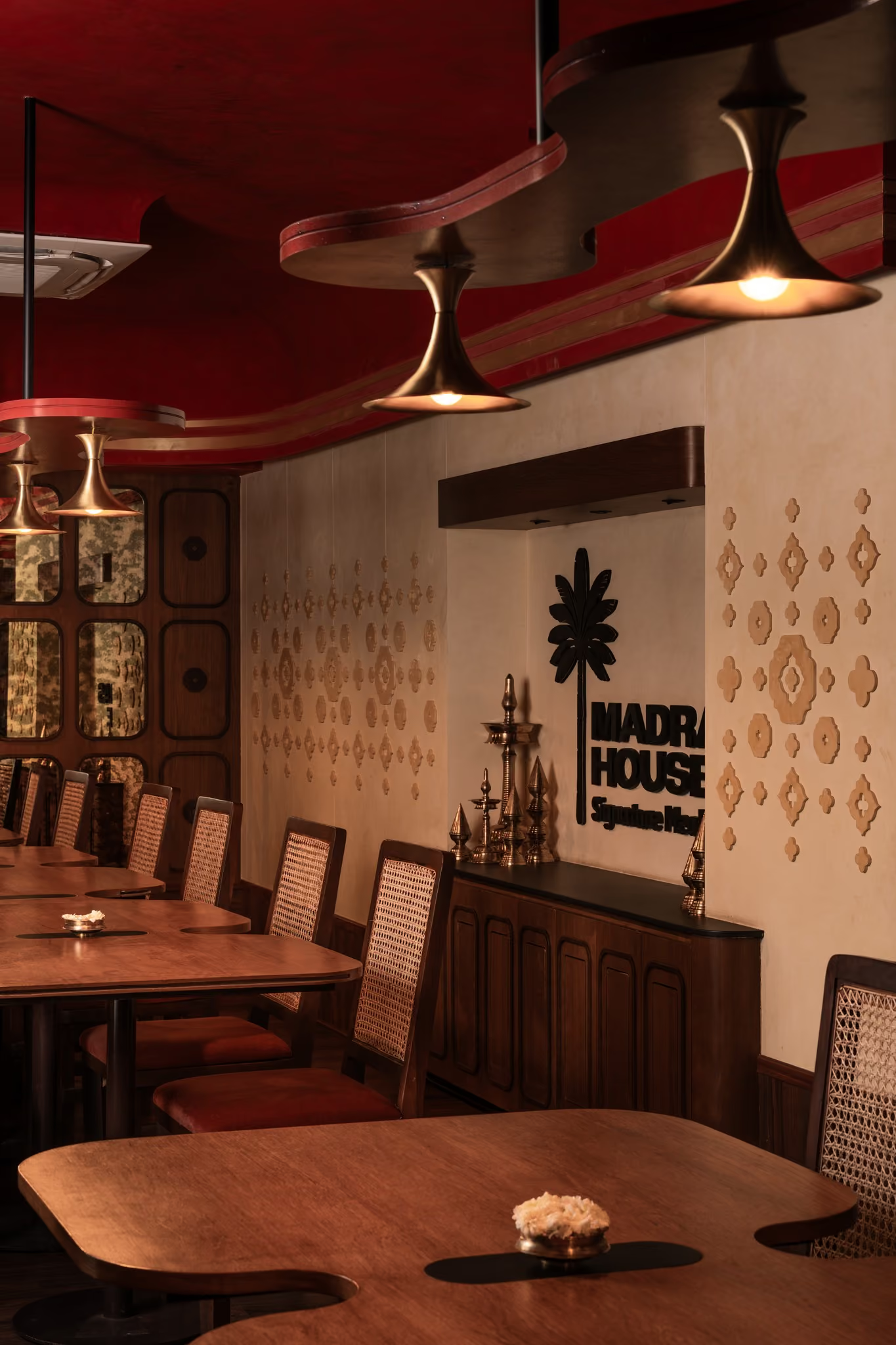
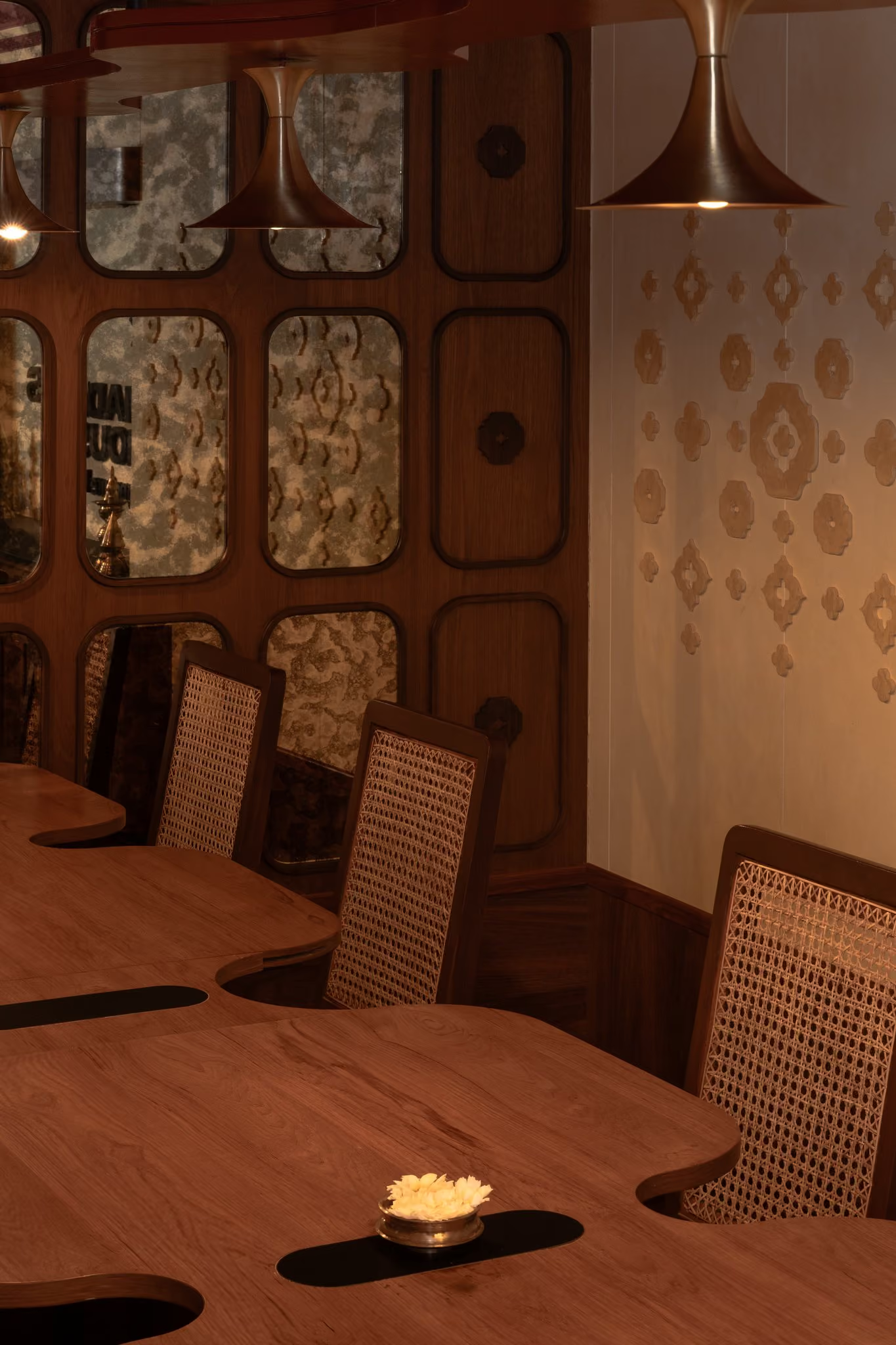
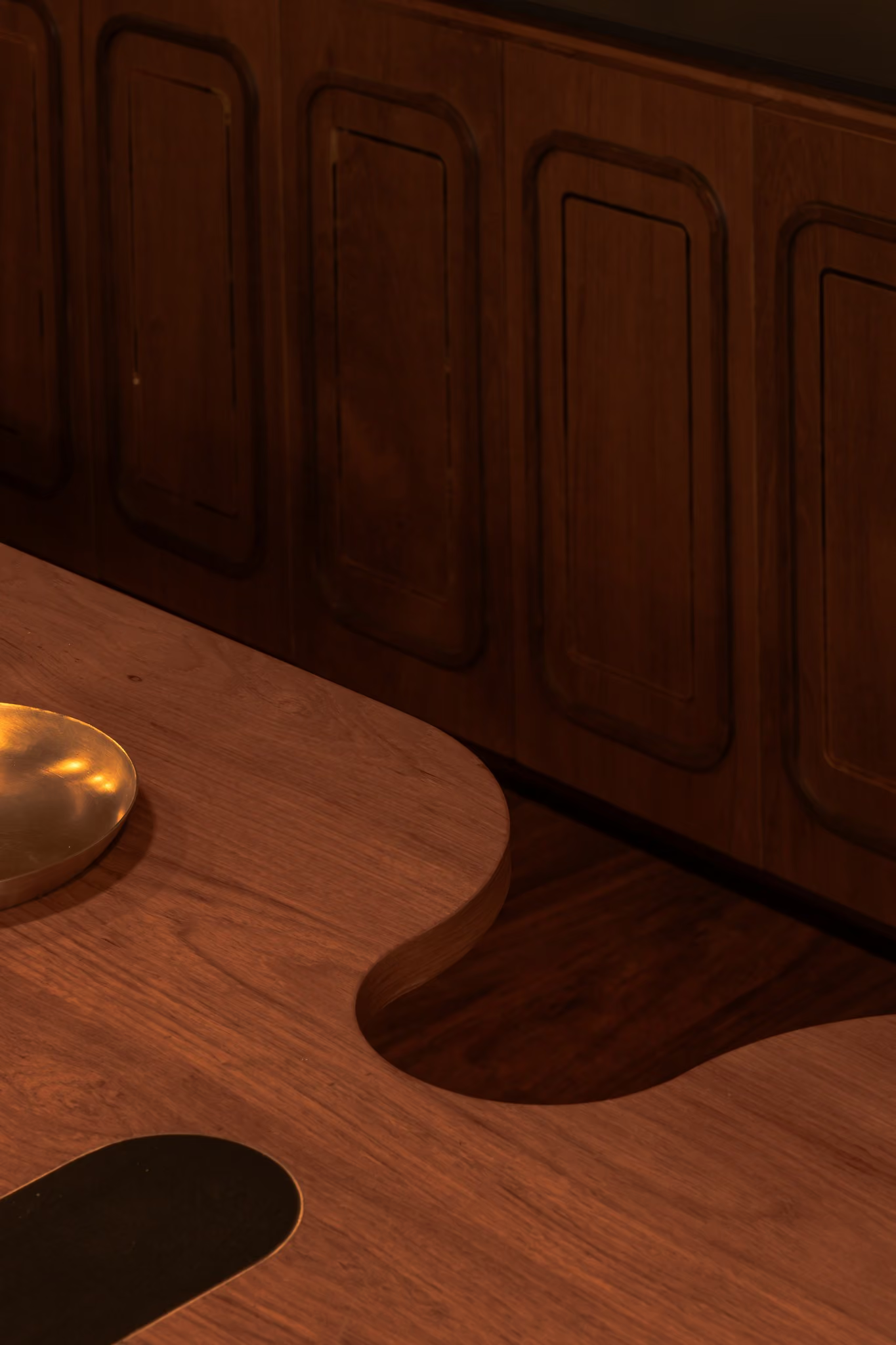
Jali Relief Wall
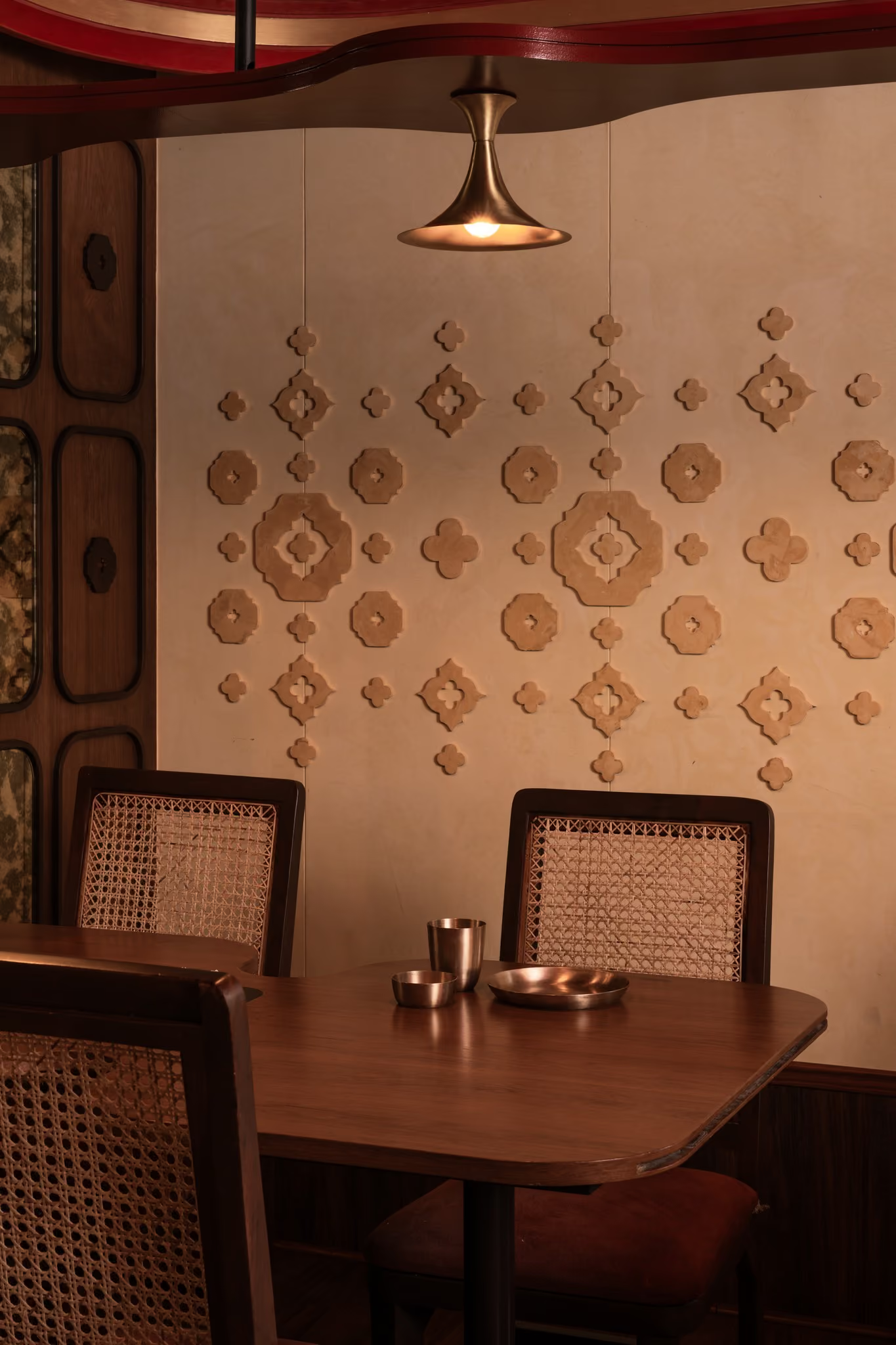
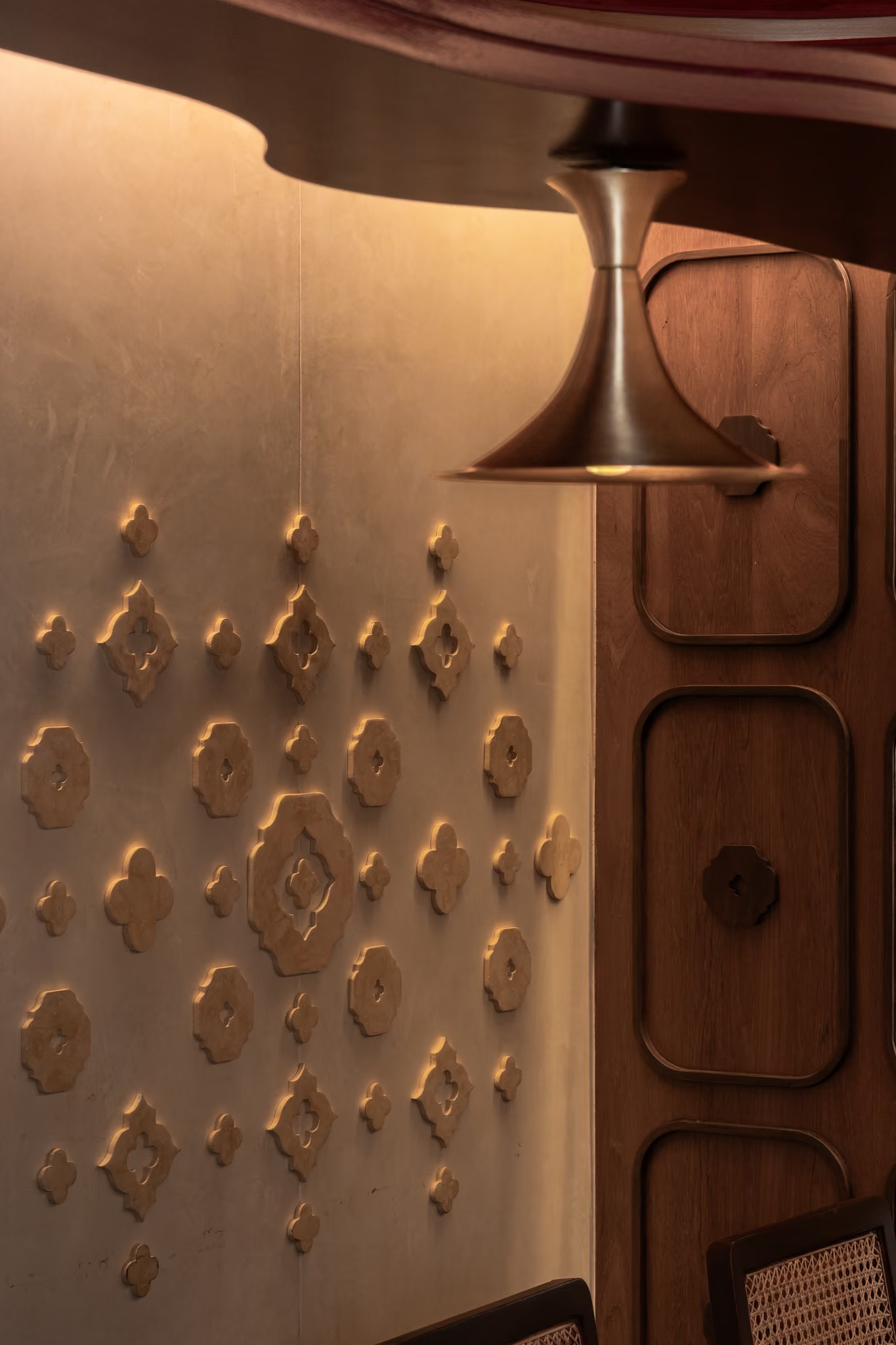
Pattern is introduced with restraint. A hand-finished plaster wall in a warm, sandy tone carries a field of relief motifs drawn from lattice and jali forms, arranged in a rhythmic, symmetrical grid. Lit from above, the raised pieces cast soft shadows that shift through the day, becoming a quiet artwork rather than a decorative surface.
Red, Ochre, Terracotta
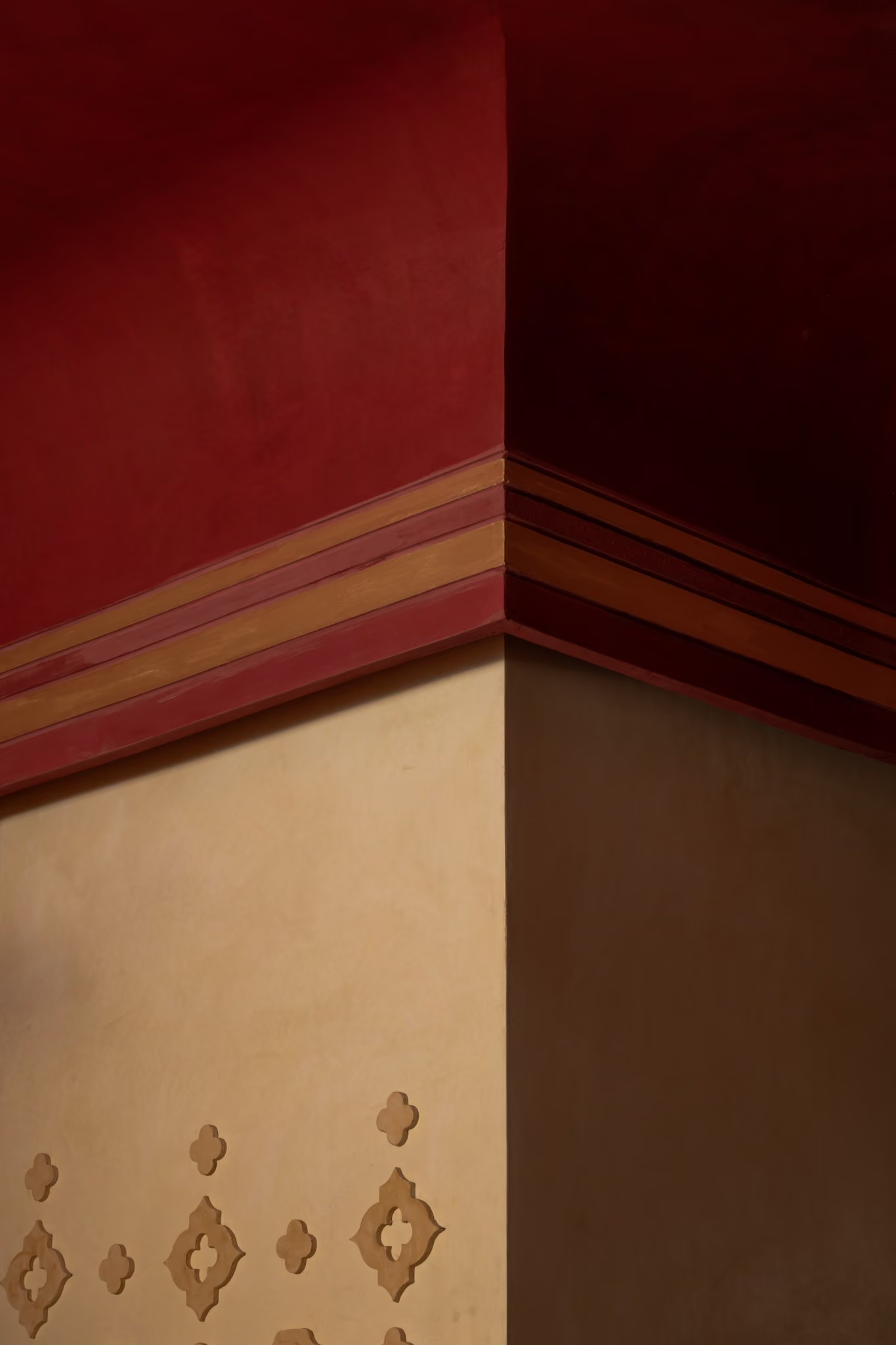
Colour is used in deliberate moments. A deep red, banded with ochre and terracotta stripes, wraps the upper walls and the sculpted, undulating canopy overhead. Beneath it, brass trumpet-shaped pendants, brass tableware and small bowls of jasmine on every table bring a soft glow and a sense of ritual to dining.
Mat-Draped Terrace
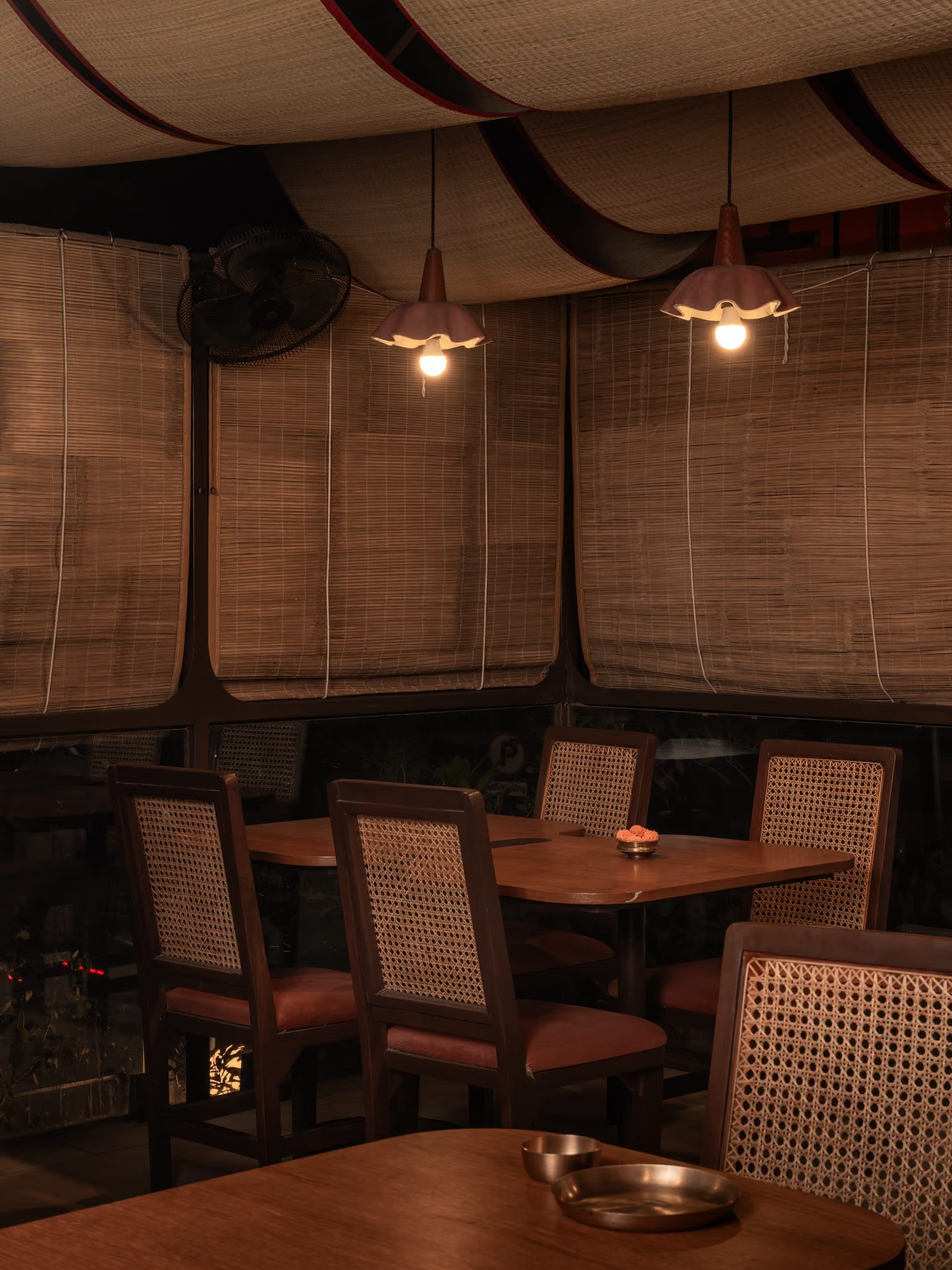
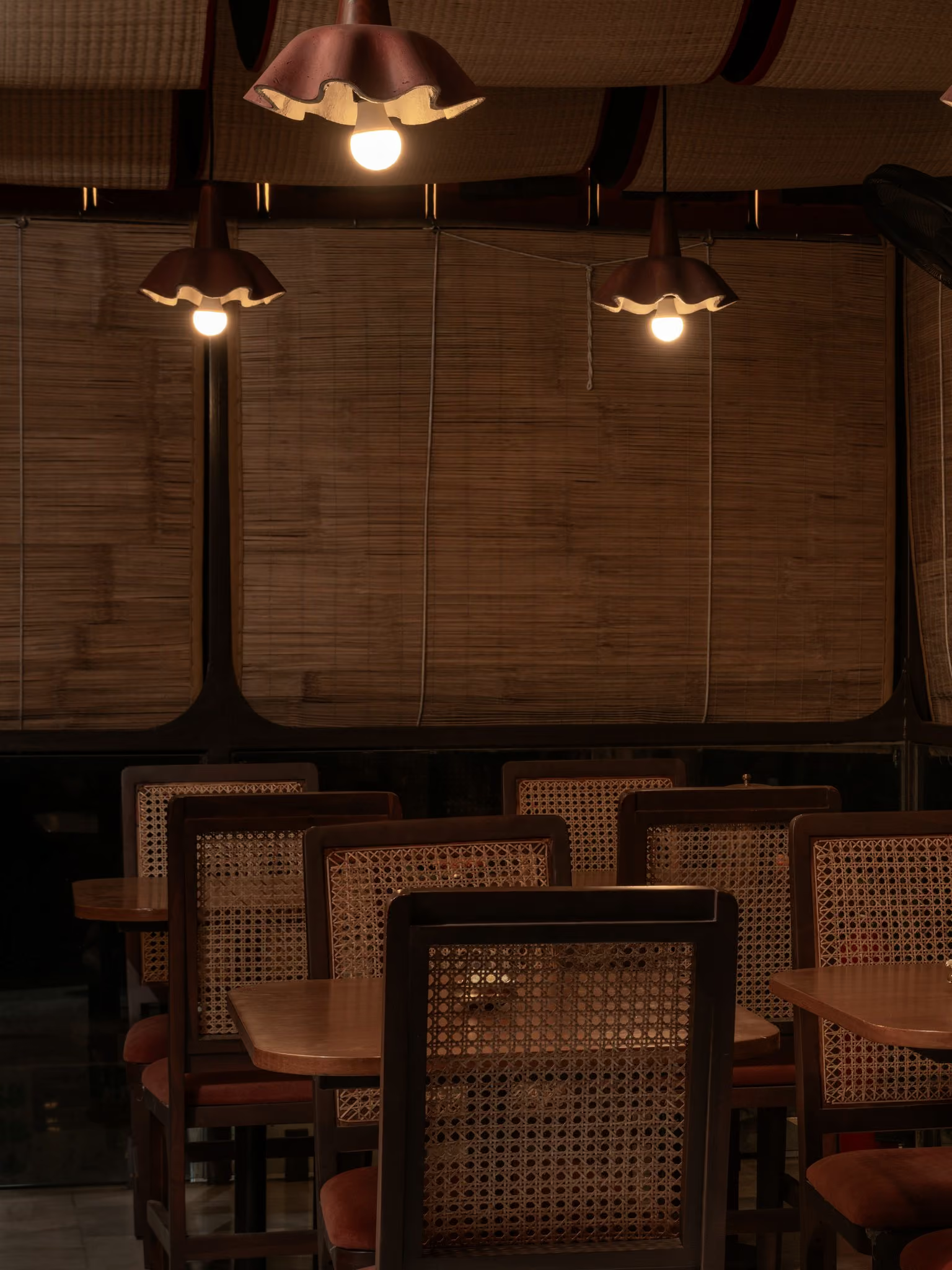
The outdoor seating extends this language into a more open setting. Handwoven mats are draped over the roof in sweeping curves, with mat blinds filtering light and view, and terracotta pendants with ruffled edges hang over the same wood-and-cane furniture. The result is a restaurant rooted in craft, material and memory, yet contemporary, warm and welcoming.
Photography – Harsheen Mengar
Project Team – Manuni, Kishan, Ananya
Contractor – MOFCO